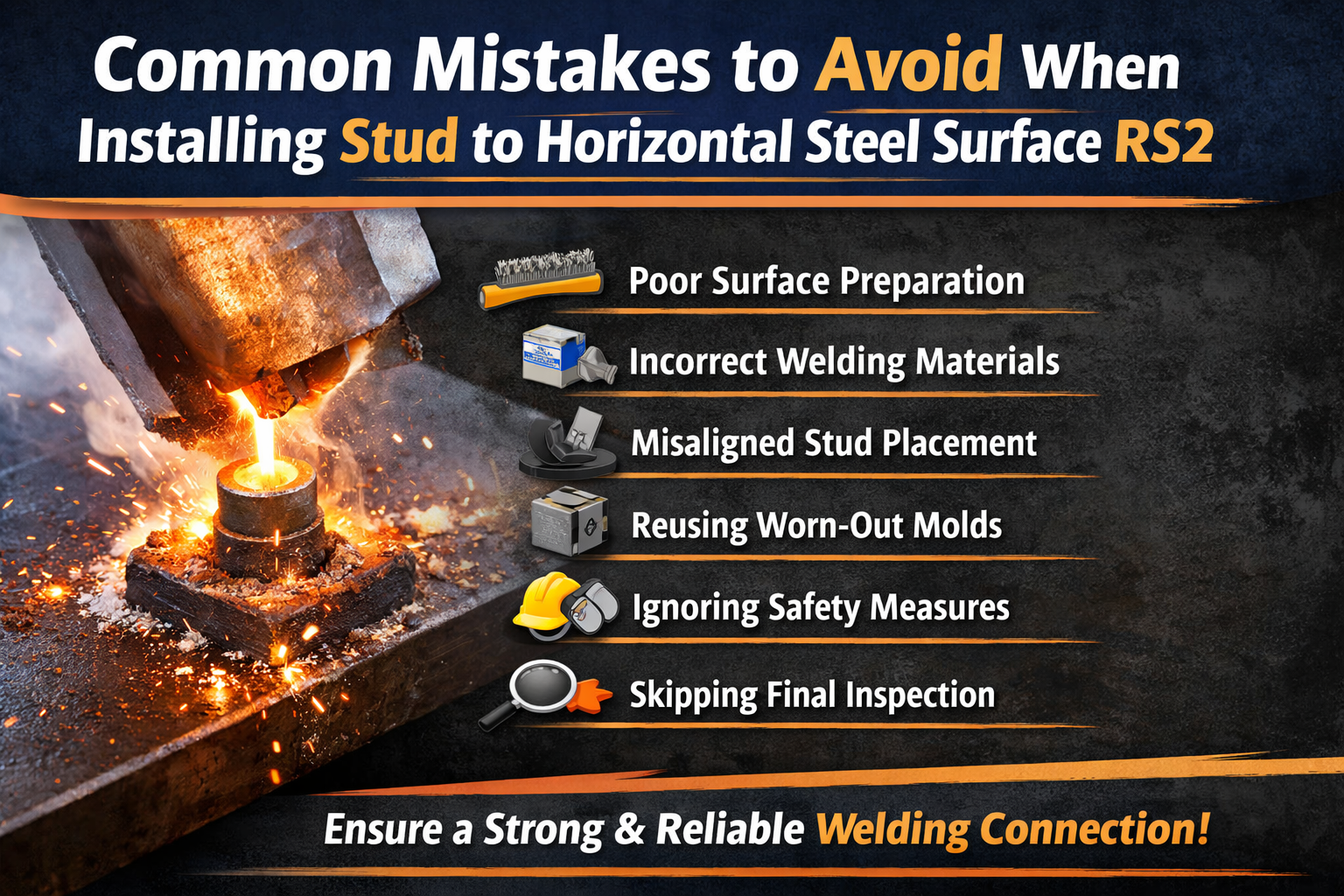
Installing a stud to horizontal steel surface is a critical process in industrial grounding, electrical bonding, and structural applications. When done correctly, it ensures a strong, durable, and reliable connection. However, even small errors during installation can lead to poor conductivity, weak bonding, or long-term system failure.
In this article, we’ll explore the most common mistakes to avoid when installing stud to horizontal steel surface RS2, along with expert tips to ensure a flawless and long-lasting connection.
Understanding Stud to Horizontal Steel Surface Installation
Before diving into mistakes, it’s important to understand what this process involves. A horizontal steel surface welding connection typically uses exothermic welding to bond a stud securely to a steel structure. This method creates a permanent molecular bond that offers superior conductivity and corrosion resistance.
The RS2 stud welding connection is especially popular due to its efficiency and reliability in industrial applications such as earthing systems, railways, power plants, and telecom infrastructure.
1. Inadequate Surface Preparation
One of the most common mistakes is failing to properly clean the steel surface before installation.
Why it matters:
Contaminants like rust, oil, paint, or dust can prevent proper bonding during stud to steel surface exothermic welding.
What happens:
- Weak weld connection
- Increased electrical resistance
- Higher chances of failure over time
Best practice:
Always clean the surface thoroughly using a wire brush, grinder, or chemical cleaner before starting the exothermic welding stud to steel surface process.
2. Using Incorrect Welding Materials
Not all welding materials are suitable for every application. Using low-quality or incompatible materials can compromise the connection.
Common mistake:
Choosing the wrong size or type of weld metal for stud to horizontal steel surface RS2.
Consequences:
- Incomplete fusion
- Brittle welds
- Reduced conductivity
Solution:
Use manufacturer-recommended materials specifically designed for RS2 stud welding connection to ensure optimal performance.
3. Improper Alignment of the Stud
Alignment plays a crucial role in ensuring a strong and stable weld.
What goes wrong:
- Stud placed at an angle
- Misalignment during mold setup
Impact:
- Uneven load distribution
- Weak mechanical strength
- Poor electrical contact
Tip:
Double-check alignment before ignition during horizontal steel surface welding connection to ensure the stud is perfectly vertical.
4. Ignoring Environmental Conditions
Environmental factors like moisture, wind, and temperature can significantly affect the welding process.
Common issues:
- Moisture causing poor ignition
- Wind disturbing the mold setup
- Low temperature affecting reaction efficiency
Result:
- Inconsistent weld quality
- Porosity in weld joint
Recommendation:
Perform exothermic welding stud to steel surface in controlled conditions. If working outdoors, use protective covers and ensure the surface is dry.
5. Reusing Worn-Out Molds
Graphite molds are commonly used in exothermic welding, but they wear out over time.
Mistake:
Continuing to use damaged or worn molds for stud to steel surface exothermic welding.
Problems caused:
- Improper weld shape
- Leakage of molten metal
- Weak bonding
Fix:
Inspect molds regularly and replace them when signs of wear appear to maintain the quality of the RS2 stud welding connection.
6. Incorrect Placement of Welding Powder
The placement and quantity of welding powder are critical for a successful weld.
Common errors:
- Using too much or too little powder
- Improper distribution inside the mold
Outcome:
- Incomplete reaction
- Weak or porous weld
Best approach:
Follow exact guidelines for powder quantity and placement when performing exothermic welding stud to steel surface.
7. Skipping Preheating (When Required)
In some cases, especially in humid or cold environments, preheating the mold and surface is necessary.
What happens if skipped:
- Moisture remains trapped
- Poor ignition and reaction
Result:
- Defective weld
- Reduced strength
Tip:
Preheat the mold and steel surface when recommended to ensure a proper horizontal steel surface welding connection.
8. Poor Handling of Equipment
Handling errors can lead to inconsistent weld quality.
Examples:
- Improper closing of the mold
- Mishandling ignition source
- Using damaged clamps
Impact:
- Unsafe operation
- Failed weld attempts
Solution:
Train operators properly and ensure all tools are in good condition before starting the stud to horizontal steel surface RS2 installation.
9. Lack of Safety Measures
Exothermic welding involves high temperatures and molten metal, making safety critical.
Common negligence:
- Not wearing protective gear
- Ignoring safety protocols
Risks:
- Burns and injuries
- Equipment damage
Safety checklist:
- Use gloves, goggles, and protective clothing
- Maintain safe distance during ignition
- Follow standard operating procedures
10. Not Inspecting the Final Weld
Many installers skip the inspection step, assuming the weld is successful.
Why this is risky:
Even minor defects can lead to major failures later.
What to check:
- Smooth and complete weld formation
- No cracks or voids
- Proper bonding between stud and steel
Recommendation:
Always inspect and, if necessary, test the RS2 stud welding connection after installation.
11. Lack of Skilled Workforce
Even with the best materials and equipment, untrained personnel can make critical mistakes.
Issues:
- Incorrect execution of steps
- Poor understanding of welding process
Result:
- Frequent failures
- Increased maintenance costs
Solution:
Invest in proper training for technicians performing stud to steel surface exothermic welding.
12. Ignoring Manufacturer Guidelines
Every product, including stud to horizontal steel surface RS2, comes with specific installation instructions.
Mistake:
Not following these guidelines strictly.
Consequences:
- Voided warranties
- Suboptimal performance
Best practice:
Always adhere to manufacturer recommendations for exothermic welding stud to steel surface to ensure reliability.
Benefits of Avoiding These Mistakes
When you avoid the above errors, you achieve:
- Strong and permanent bonding
- Excellent electrical conductivity
- Long-lasting performance
- Reduced maintenance costs
- Enhanced safety and reliability
A properly installed horizontal steel surface welding connection ensures your grounding or bonding system performs efficiently for years.
Conclusion
Installing a stud to horizontal steel surface RS2 may seem straightforward, but it requires precision, expertise, and attention to detail. From surface preparation to final inspection, every step plays a crucial role in the success of the connection.
By avoiding these common mistakes—such as improper cleaning, incorrect material usage, poor alignment, and ignoring environmental factors—you can ensure a reliable and durable RS2 stud welding connection.
Whether you’re working on industrial grounding systems or structural applications, following best practices in stud to steel surface exothermic welding will help you achieve superior results and long-term performance.
Leave a Reply